Table of Contents
Get more resume writing tips, career insights, and workforce trends in your personalized search experience.
What You Need to Know
- Most professional CVs include five core sections: contact information, a profile or summary, work experience, education, and relevant skills.
- Additional CV sections, such as certifications, publications, awards, languages, and professional affiliations, can strengthen your application when they’re relevant to the role.
- Your CV structure should reflect your career stage. Recent graduates may emphasize education, while experienced professionals should usually prioritize work history and measurable achievements.
- Clear section headings, consistent formatting, and role-specific keywords can make your CV easier for recruiters and applicant tracking systems (ATS) to scan.
- Leave out unnecessary personal information, salary history, outdated skills, and anything that doesn’t support your qualifications.
You can have the right experience for a job and still struggle to get interviews if your CV makes that experience difficult to find. Generic templates, crowded layouts, and unnecessary information can make it harder for recruiters and ATS software to identify your qualifications.
Knowing what to include in a CV helps you present your qualifications clearly and make important information easy to find. In this guide, you’ll learn which CV sections are essential, which are optional, what to leave out, and how to structure your CV for your career stage.
Want to save time and have your CV ready in five minutes? Try Zety’s CV Maker. It’s fast and easy to use. Plus, you’ll get ready-made content to add with one click.
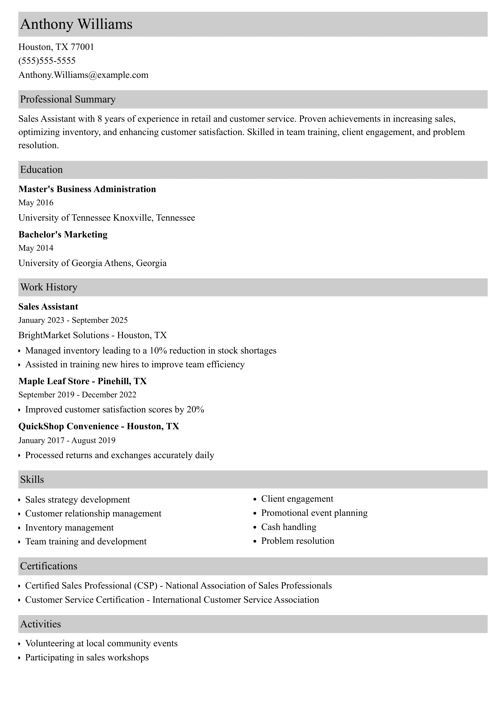
Sample CV made with our builder—See more CV examples here.
One of our users, Brittanya, had this to say:
Zety really helped me create the best CV possible. It pointed out how things could be better on my existing CV and suggested many things to be reworded or removed.
What Is a CV & How Does It Differ From a Resume?
A CV, or curriculum vitae, is a detailed record of your professional and academic background. In the U.S., CVs are typically longer and more comprehensive than resumes, especially for academic, research, medical, and scientific roles. They may include education, professional experience, research, publications, presentations, awards, grants, teaching experience, and professional affiliations.
A resume, by contrast, is a targeted overview of your qualifications for a specific position. Rather than documenting your full career history, a resume highlights the experience, skills, and achievements most relevant to the employer’s needs. As a result, resumes are generally shorter, while a CV may extend beyond one or two pages as your career develops.
The terminology also varies by location. In the U.S., employers generally distinguish between CVs and resumes, while in many other countries, “CV” is the standard term for a job application document similar to what U.S. employers call a resume. Always follow the employer’s instructions; if a U.S. employer specifically requests a CV, provide a detailed CV rather than simply renaming your resume.
What Should a CV Include? 5 Core Sections & Formatting Tips
A strong CV should include five core sections: contact information, a professional profile, work experience, education, and relevant skills. These main parts of a CV give employers the information they need to understand your background and qualifications, while optional sections can add detail when relevant to the role.
Contact Information & Header Setup
Your CV header should include your full name, phone number, professional email address, and city and state, province, or region so employers can quickly identify and contact you.
You can also add a job title or headline, LinkedIn profile, or portfolio URL when it supports your application. Otherwise, include only the contact information employers need to reach you; avoid unnecessary personal information that isn’t relevant to your qualifications.
Keep your header simple and consistent with the rest of the document. Avoid crowding it with graphics or decorative elements that can distract from important information.
For example:
Jordan Lee
Marketing Manager
Toronto, ON | 416-555-0123 | jordan.lee@email.com
linkedin.com/in/jordanlee | jordanlee.com
Personal Profile or Professional Summary
Your personal statement, also called a professional profile or summary, should be a concise three- to four-sentence introduction to your qualifications. Include your professional identity, relevant experience, core skills or expertise, and one or two achievements that demonstrate the value you can bring to the role.
Focus on evidence, not generic claims. Instead of describing yourself as “hardworking” or “results-driven,” show what you’ve accomplished through measurable results, specialized expertise, or other qualifications that matter for the position.
For example:
Accomplished university professor specializing in 20th-century American literature with 10+ years of teaching and research experience. Designs undergraduate and graduate courses, supervises student research, and contributes to curriculum development. Published extensively in peer-reviewed journals and presented research at national and international conferences. Seeking a faculty position focused on scholarship, student mentorship, and interdisciplinary collaboration.
Professional Experience & Work History
Your work experience section should show employers what you’ve accomplished and the value you’ve contributed, not simply list your previous duties. Organize your roles in reverse-chronological order, starting with your most recent position, and include your job title, employer, location, and dates of employment.
Under each role, use concise bullet points to highlight relevant responsibilities, contributions, and results. Start with strong action verbs such as “developed,” “led,” “increased,” or “implemented,” and use numbers when they help demonstrate the scope or impact of your work.
Give the most space to recent and relevant positions. You can usually condense older or less-relevant experience so it provides useful career context without overcrowding your CV. If you’re applying for an academic or research role, you may also create separate teaching or research sections when those experiences are important enough to warrant additional detail.
For example:
Professional Experience
Associate Professor
University of Chicago | Chicago, IL | August 2015–Present
- Design and teach 8 undergraduate and 5 graduate courses per year, improving student course evaluation scores by 15%.
- Supervise 12 master’s theses and 4 doctoral dissertations, guiding students to successful defense.
- Lead a curriculum redesign committee that has updated 3 core programs, increasing enrollment by 10%.
Education & Qualifications
Your education section should list your degrees in reverse-chronological order, starting with the most recent. Include the degree and field of study, institution, and graduation date when relevant. You can also add professional qualifications or credentials that support your candidacy.
Where you place education depends on your career stage. Recent graduates and candidates with limited work experience may feature education near the top of their CV, while experienced professionals generally lead with their work history. If you graduated many years ago, you can usually leave off the graduation date unless it’s relevant or requested.
For academic or research-focused positions, consider adding details such as honors, thesis or dissertation titles, and relevant coursework. Keep these additions focused on information that strengthens your qualifications for the position.
For example:
Education
PhD in English Literature
Harvard University | Cambridge, MA
- Dissertation: “Narratives of Identity in 20th-Century American Fiction”
- Awarded Graduate Research Fellowship for outstanding scholarship
MA in English Literature
University of Michigan | Ann Arbor, MI
- Thesis: “Modernism and the American Short Story”
- Graduated magna cum laude
BA in English
Boston University | Boston, MA
Skills & Technical Expertise
Your skills section should highlight the abilities that are most relevant to the position, including technical expertise, tools, methods, and other job-specific qualifications. Select the skills most relevant to the role, prioritizing specific hard skills and technical skills the employer needs.
Be selective with soft skills, such as communication, leadership, or collaboration. Instead of relying on unsupported claims like “hardworking” or “team player,” demonstrate these abilities through accomplishments in your professional experience whenever possible.
Technical candidates may benefit from a dedicated technical skills section that groups related expertise into categories, such as programming languages, software, laboratory techniques, or research methods. This format can make specialized qualifications easier to find while keeping the section organized and easy to scan.
For example:
Technical Skills
- Programming: Python, SQL
- Data & Visualization: Excel, Tableau, Power BI
- Analytics: A/B testing, statistical analysis
- Web & Marketing: Google Analytics 4, Looker Studio
How to Format Your CV
A well-formatted CV should use clear section headings, readable fonts, consistent spacing, and a simple layout that makes your qualifications easy to find. Prioritize readability over elaborate design so hiring managers can quickly review your information and ATS software can more easily identify important content.
- Choose a professional font, such as Arial, Calibri, or Georgia, and keep font sizes consistent throughout.
- Use clear, standard section headings and enough white space to separate information.
- Keep margins and spacing consistent, and align dates and locations in the same way throughout the document.
- Use concise bullet points instead of dense paragraphs, particularly in your experience sections.
- Keep optional sections consistent with the rest of your CV.
- Save your CV in the file format requested by the employer. If no format is specified, PDF is often a practical choice because it preserves your formatting.
Optional & Specialized CV Sections
Optional CV sections can strengthen your application by highlighting relevant qualifications beyond the five core sections. Depending on your field and experience, you might include certifications, publications, awards, professional affiliations, languages, teaching, or research. Academic, medical, research, and technical CVs may require more specialized sections.
Choose additional sections based on what strengthens your application:
- Certifications and licenses: Include relevant certifications, licenses, or credentials, along with the issuing organization and date earned or expiration date, when applicable.
- Publications and presentations: List relevant publications, conference presentations, books, articles, or other published work. Use a consistent citation style, particularly for an academic CV.
- Grants, fellowships, and awards: Highlight competitive funding, scholarships, fellowships, honors, and professional awards that demonstrate expertise or achievement in your field.
- Professional associations and affiliations: Include memberships in professional organizations, academic societies, or industry groups that are relevant to your work. Leadership positions or active involvement can also be worth noting.
- Languages: List languages you speak and your proficiency level when language skills are relevant to the position, your research, or the people and organizations you’ll work with.
- Teaching and research experience: Academic and research candidates can create dedicated sections for courses taught, student supervision, curriculum development, laboratory work, field research, or major research initiatives. Focus on responsibilities, outcomes, and contributions that demonstrate your expertise.
Other useful additions depend on your experience and industry.
Projects can demonstrate applied skills or measurable results, while volunteer experience can highlight leadership, community involvement, or transferable skills. You can also include relevant conferences, hobbies, or interests when they add useful information not covered elsewhere.
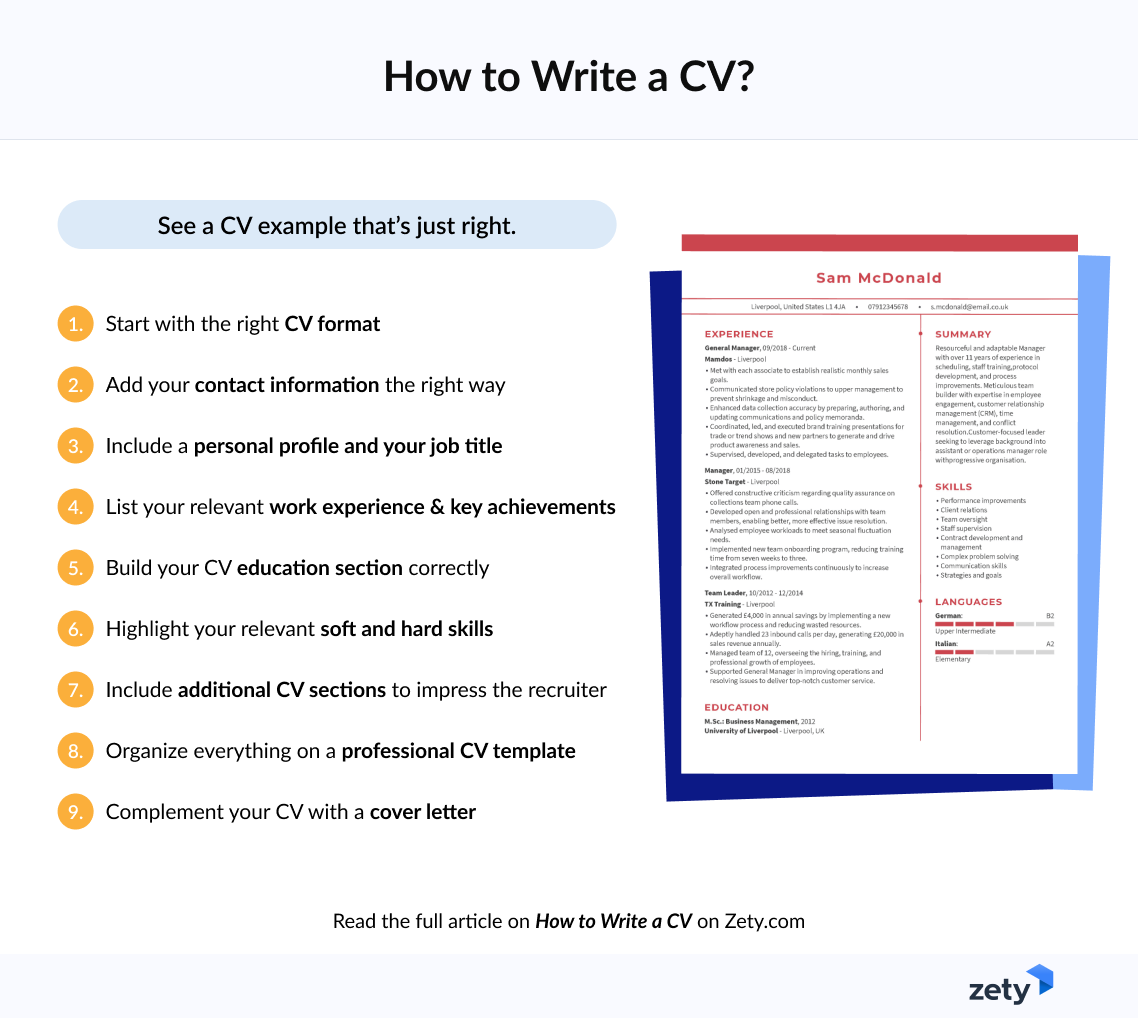
Professional CV Template
A professional CV template gives you a starting structure you can customize around your experience, qualifications, and career goals. The right CV format for job applications varies by role and career stage, so adjust the section order and level of detail to emphasize your most relevant qualifications.
Contact Information
[Full Name]
[Job Title / Professional Headline]
[Phone Number] | [Email Address]
[City, State]
[LinkedIn / Portfolio / Website, if relevant]
Personal Statement
[Write 3–4 sentences summarizing your professional identity, relevant experience, expertise, and one or two notable achievements.]
Professional Experience
[List your most recent roles first. Focus on measurable achievements and results.]
[Job Title]
[Employer] | [City, State] | [Start Date–End Date]
- [Action verb + contribution or accomplishment + measurable result.]
- [Action verb + contribution or accomplishment + measurable result.]
- [Action verb + contribution or accomplishment + measurable result.]
[Previous Job Title]
[Employer] | [City, State] | [Start Date–End Date]
- [Action verb + contribution or accomplishment + measurable result.]
- [Action verb + contribution or accomplishment + measurable result.]
- [Action verb + contribution or accomplishment + measurable result.]
Education
[List your degrees in reverse-chronological order. Include optional details like honors or thesis titles, if relevant.]
[Degree & Field of Study]
[Institution] | [City, State] | [Graduation Date (optional)]
- [Thesis or dissertation title (optional)]
- [Honors, distinctions, or awards (optional)]
- [Relevant coursework, certifications, or projects (optional)]
Skills
[Include 6–8 relevant hard, technical, or specialized skills that match the role.]
- [Skill]
- [Skill]
- [Skill]
Optional Sections
[Add sections that are relevant to your field and qualifications, such as:]
- [Certifications & Licenses]
- [Publications & Presentations]
- [Grants, Fellowships, & Awards]
- [Professional Associations & Affiliations]
- [Languages]
- [Teaching & Research Experience]
- [Projects or Volunteer Experience]
💡 Pro tip: Zety’s CV templates provide built-in formatting and design options that make it easier to create a consistent, professional CV.
Creating a CV with our builder is simple. Choose a CV template and follow our step-by-step guidance to have a professional CV ready in minutes.
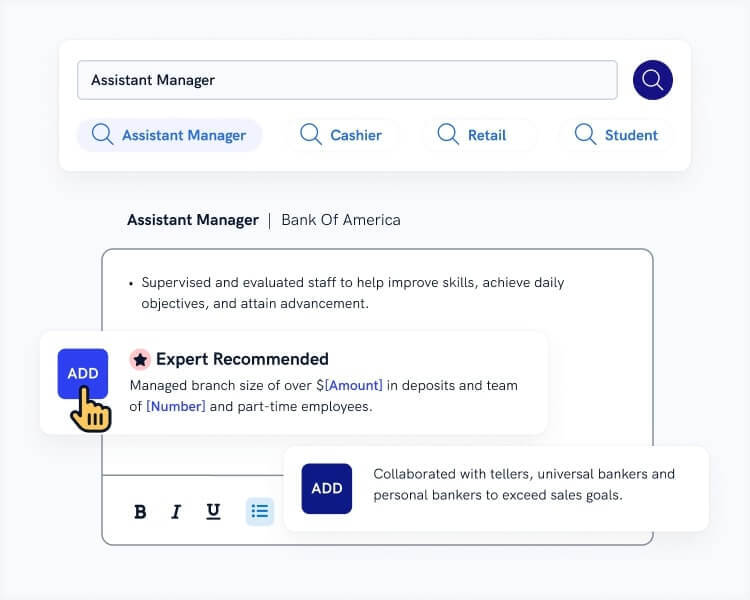
When you’re done, Zety’s CV Checker can evaluate your CV and suggest improvements.
How to Structure Your CV for Your Career Stage
CV structure depends on your career stage and relevant qualifications. Recent graduates may emphasize education and skills, while experienced professionals typically prioritize work history and achievements. Academic and research candidates may give more space to publications, teaching, or research.
Entry-Level Candidates & Recent Graduates
If you’re starting your career or have limited professional experience, structure your CV around education, internships, projects, and transferable skills. Put education above work experience when your academic background is more relevant or substantial than your employment history, and use projects or coursework to show skills you haven’t used professionally yet.
Mid-Career Professionals
If you have several years of relevant experience, give your work history and measurable achievements greater prominence. A chronological CV format can clearly show your career progression, increasing responsibilities, and accomplishments over time.
Keep a dedicated skills section for relevant technical or specialized abilities, but let your professional experience provide most of the evidence of what you’ve accomplished.
Senior Professionals & Executives
Senior professionals and executives should emphasize leadership, strategic contributions, measurable results, and the scope of their responsibilities. Use most of the space for recent, highly relevant experience rather than documenting every responsibility from earlier roles.
Depending on your field, sections for board service, professional affiliations, publications, awards, speaking engagements, or other significant accomplishments may also strengthen your CV.
Academic-to-Industry Career Transitions
If you’re moving from academia into industry, reorganize your CV around the qualifications most relevant to the target role. Bring transferable skills, professional experience, technical expertise, and results closer to the top instead of automatically leading with publications, teaching, or a detailed academic history.
Translate academic accomplishments into language employers outside academia can quickly understand. For example, research may demonstrate data analysis or project management, while teaching can show communication, leadership, training, and presentation skills. Keep specialized academic sections when they support the position, but condense details that aren’t relevant to your new career direction.
CV Examples to Get Inspired
CV examples can help you see how to organize sections, prioritize relevant qualifications, and write achievement-focused bullet points. Pay attention to section order, spacing, headings, and how much space each section receives.
Use the following examples for inspiration—your CV should reflect your experience, career stage, and the requirements of the position you’re targeting.
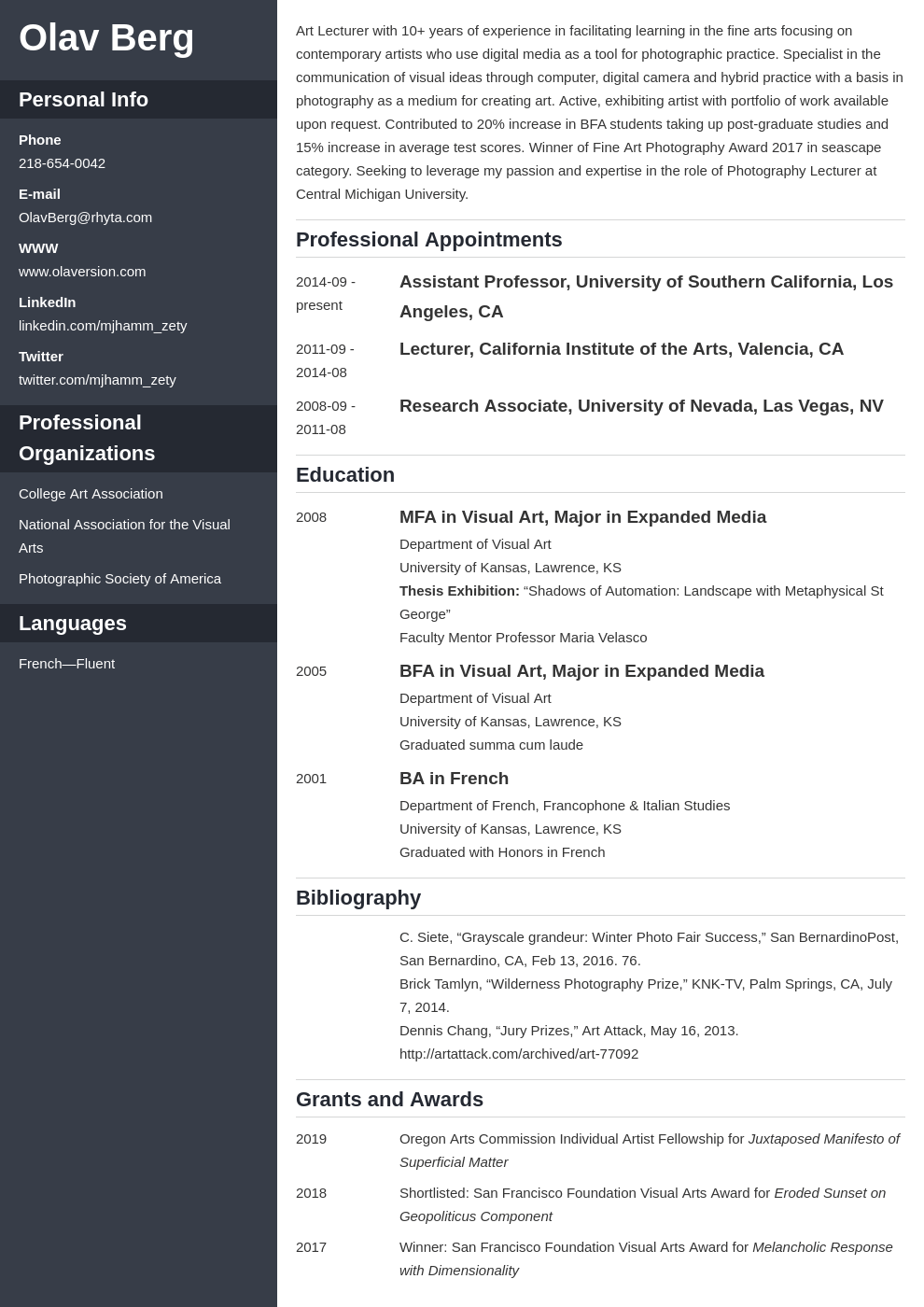
Art Lecturer CV
This example combines extensive experience and specialized expertise with measurable achievements, such as improving postgraduate enrollment and test scores. It also highlights relevant awards, professional activity, and a clear career goal, giving employers a well-rounded view of the candidate’s qualifications.
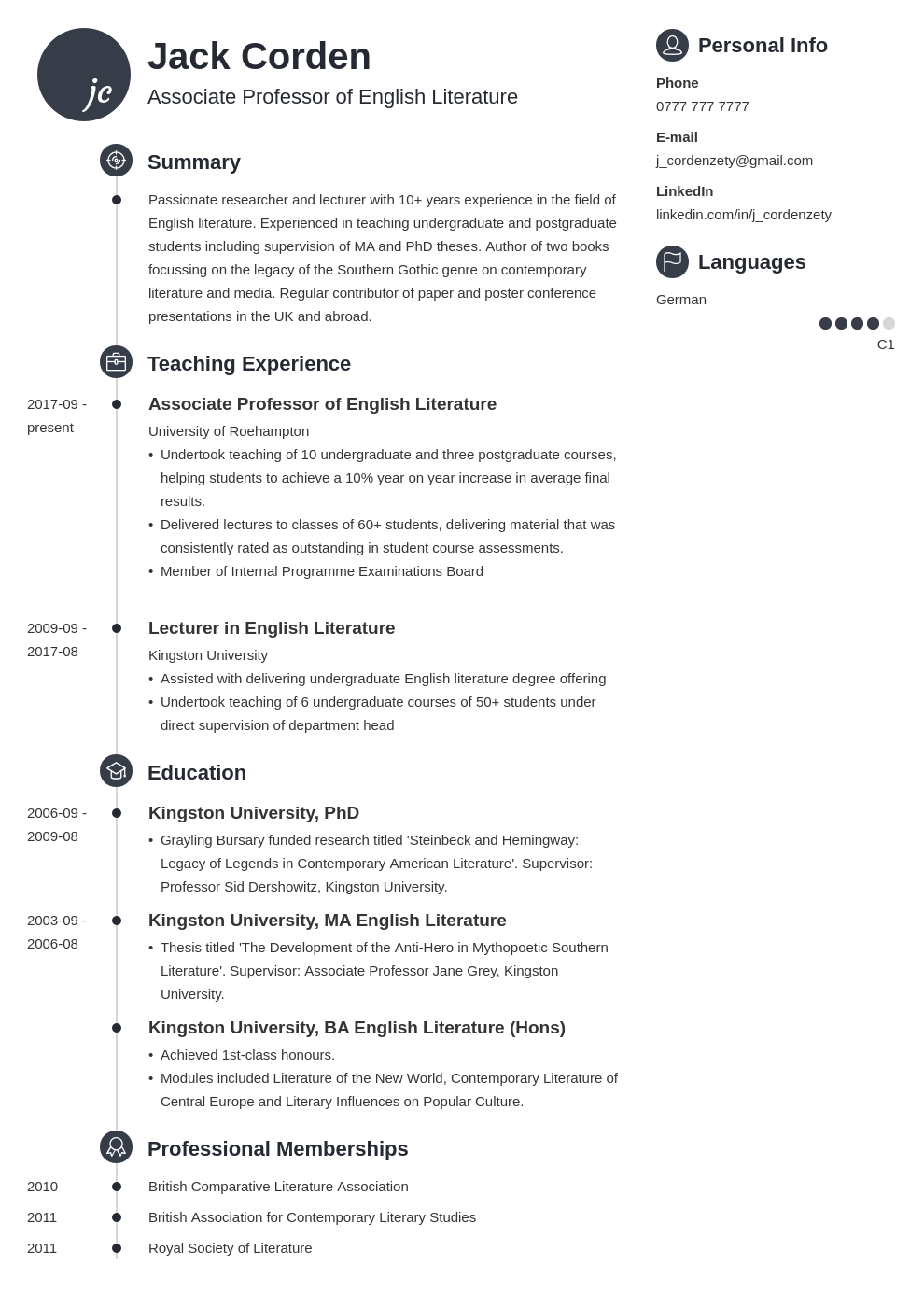
Associate Professor CV
This example showcases the breadth of an academic career by balancing teaching experience with research, publications, thesis supervision, and conference presentations. It demonstrates how an academic CV can highlight both expertise and contributions to the field.
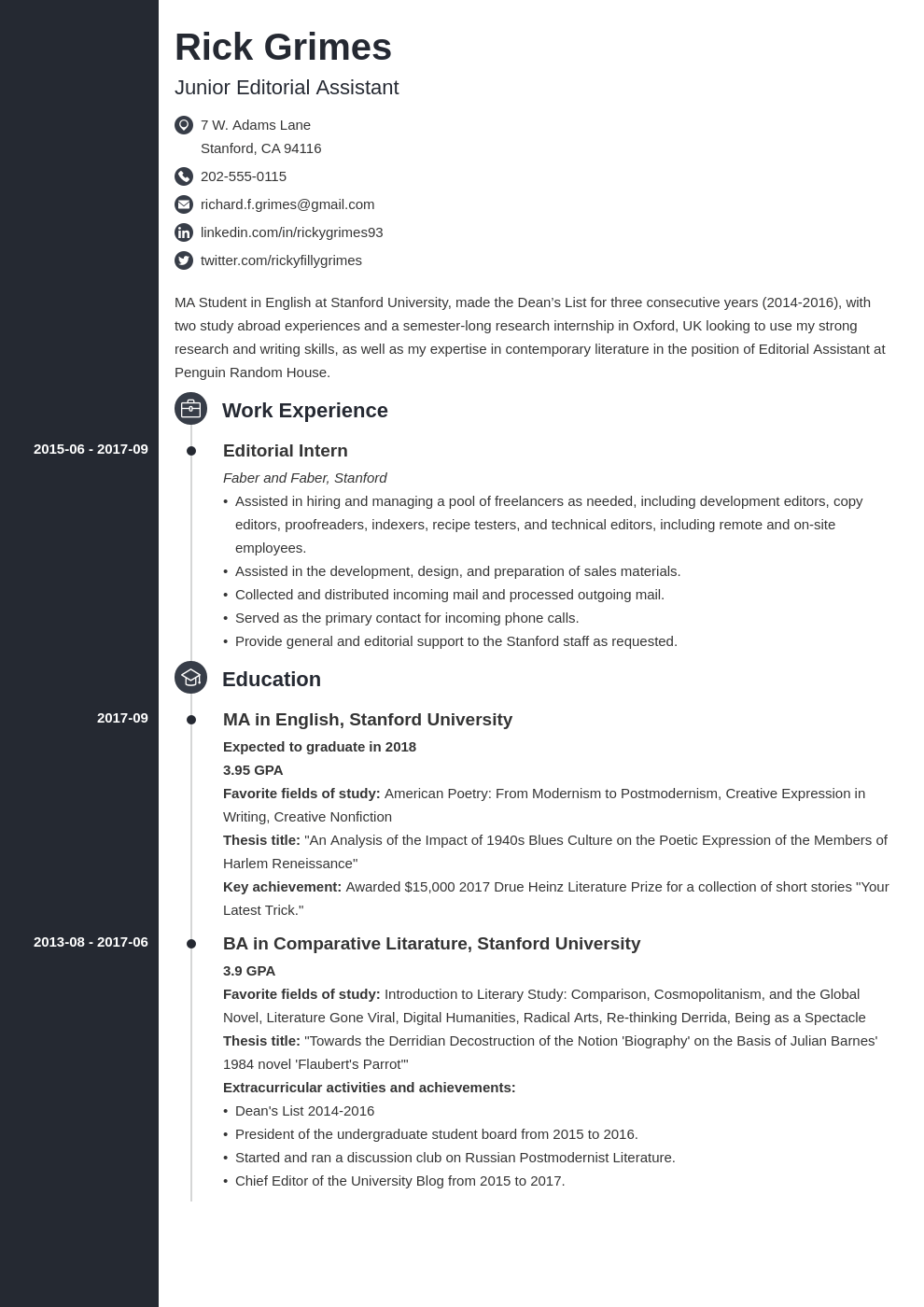
Graduate CV
This example shows how a graduate can emphasize academic achievements and relevant experience when they have limited professional experience. Dean’s List recognition, study abroad experience, and a research internship demonstrate transferable research and writing skills.
What Not to Include in Your CV
Knowing what goes on a CV also means knowing what to leave off. Personal information, outdated qualifications, irrelevant details, and unnecessary extras can distract from your strongest credentials. Focus on information that helps an employer understand your suitability for the role.
Avoid including:
- Unnecessary personal information: Leave out details such as your age, date of birth, marital status, Social Security number, or other personal identifiers that aren’t required for the application.
- An unprofessional email address: Use a straightforward email address based on your name, not a nickname or informal account.
- A headshot, unless it’s customary or requested: In the U.S., you generally don’t need to include a photo on your CV. Expectations can vary by country and profession, so follow local conventions and employer instructions.
- Salary history or expectations: Don’t include previous salaries or compensation expectations unless the employer specifically asks.
- Outdated or irrelevant skills: Remove old technologies, basic skills that are assumed for the role, and qualifications that no longer support your candidacy.
- “References available upon request”: Employers already know they can request references, so this line takes up space without adding useful information.
- Dense paragraphs or unnecessary design elements: Keep information easy to scan, and avoid overly complex layouts, graphics, or tables that can make important details harder for recruiters or some ATS to identify.
- Other irrelevant information: Don’t include hobbies, unrelated experience, or personal details unless they add meaningful context or show qualifications relevant to the position.
Key Takeaways
- Include the five core CV sections: contact information, a professional profile, work experience, education, and relevant skills.
- Keep your formatting clear and consistent. Use standard section headings, readable fonts, even spacing, and an easy-to-scan layout.
- Match your CV to the job. Prioritize experience and qualifications that reflect the employer’s requirements, and incorporate relevant keywords naturally throughout your CV.
- Show results, not just responsibilities. Use specific accomplishments and measurable outcomes whenever possible.
- Remove anything that doesn’t strengthen your application. Unnecessary personal details, outdated skills, and irrelevant information distract from your qualifications.
Frequently Asked Questions
What are five things you should include in your CV?
Five things to include in your CV are contact information, a professional profile, work experience, education, and relevant skills. Together, these sections give employers a clear view of your background, qualifications, and ability to perform the job.
What are red flags on a CV?
Red flags on a CV include unexplained inconsistencies, vague job descriptions, excessive irrelevant information, poor formatting, spelling errors, and claims that aren’t supported by specific accomplishments. Review your CV for accuracy, consistency, and relevance before submitting it.
What should a 2026 CV look like?
A 2026 CV should have a clean, professional layout with clearly labeled sections, consistent formatting, concise bullet points, and content tailored to the target role. Avoid unnecessary decorative elements that can make important information harder for recruiters or some applicant tracking systems to identify.
Can ChatGPT write a CV?
ChatGPT can help brainstorm, organize, or revise CV content, but you should review everything it produces for accuracy and make sure the final document reflects your actual experience and achievements. Never include AI-generated accomplishments, skills, or credentials that you can’t verify when writing your CV.
What should you include in a CV with no experience?
A CV with little or no professional experience can emphasize education, relevant coursework, projects, internships, volunteer work, certifications, and transferable skills. Focus on evidence of what you’ve learned and accomplished rather than trying to fill space with unrelated work history.
About Zety’s Editorial Process
This article has been reviewed by our editorial team to make sure it follows Zety’s editorial guidelines. We’re committed to sharing our expertise and giving you trustworthy career advice tailored to your needs. High-quality content is what brings over 40 million readers to our site every year. But we don’t stop there. Our team conducts original research to understand the job market better, and we pride ourselves on being quoted by top universities and prime media outlets from around the world.

Follow Zety as a preferred source in Google
Get more resume writing tips, career insights, and workforce trends in your personalized search experience. Learn more >

Share:


